 Melbourne, Victoria (Australia)


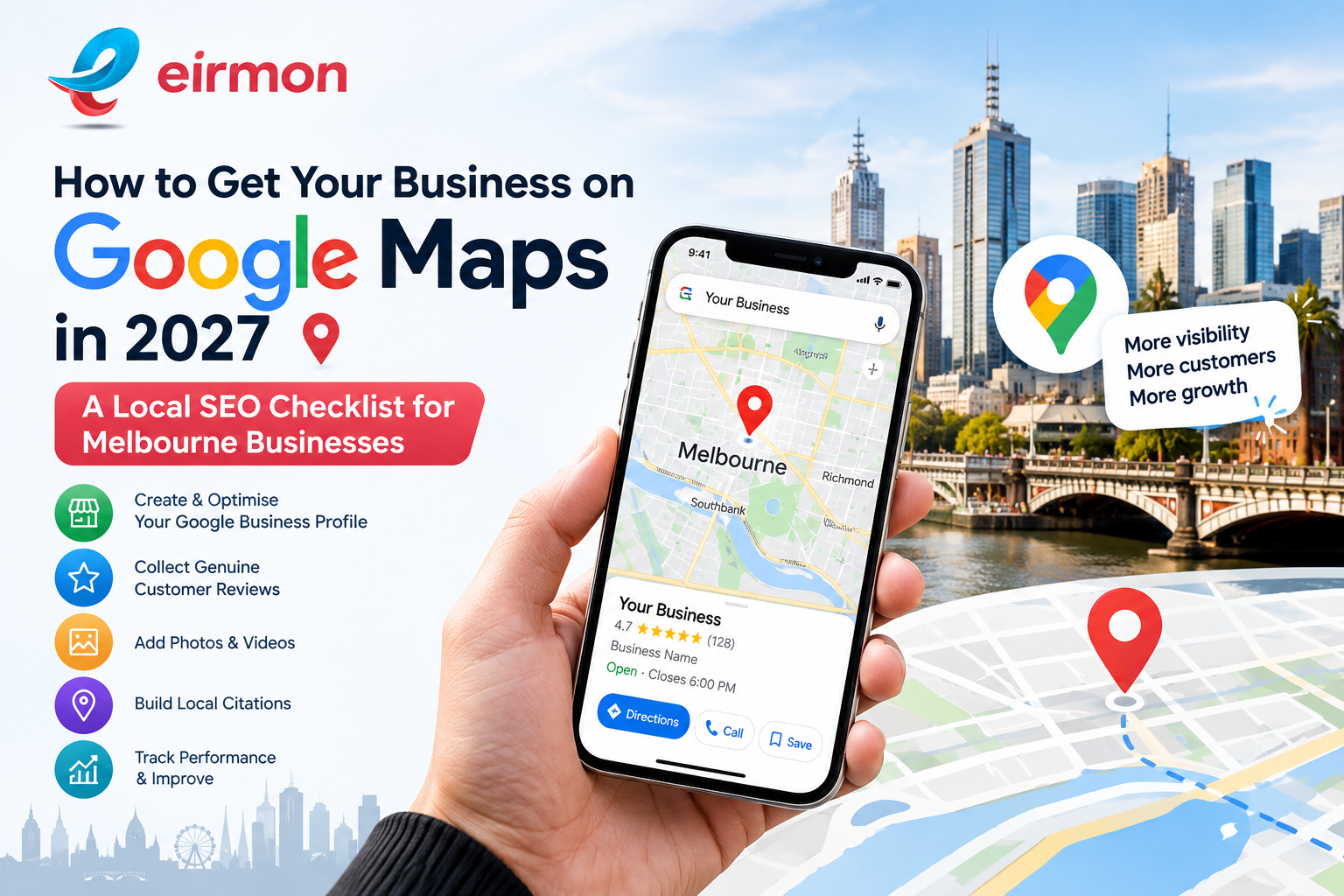
How to Get Your Business on Google Maps in 2027: A Local SEO Checklist for Melbourne Businesses
 21 October 2026
Introduction
When customers search for a nearby service, restaurant, retail store, or professional business, they often turn to Google Maps to find relevant options. Whether someone is looking for a digital marketing agency in Melbourne, a local plumber, or a nearby café, appearing prominently in local search results can help businesses connect with potential customers at the right time.
“For Melbourne businesses looking to improve local visibility, local SEO services in Melbourne from Eirmon Solutions can help strengthen their online presence, optimise their Google Business Profile, and attract more relevant local customers through Google Search and Google Maps.”
As competition for local customers continues to grow, getting your business on Google Maps in 2027 requires more than creating a basic listing. Melbourne businesses need to maintain accurate business details, demonstrate local relevance and build trust with potential customers.
This guide explains how to get your business on Google Maps and provides a practical local SEO checklist to help your business improve its online visibility in Melbourne.
1. Create or Claim Your Google Business Profile
The first step towards appearing on Google Maps is creating or claiming your Google Business Profile. This free tool allows eligible businesses to manage how their information appears across Google Search and Google Maps.
Start by searching for your business name on Google Maps. If a profile already exists, check whether you can claim it. If your business does not have a listing, create a new profile through Google's official Business Profile platform.
Visit Google Business Profile to get started.
During setup, provide your official business name and select the business category that best describes your primary services. Follow Google's verification process to establish that you are authorised to manage the business.
Local SEO checklist:
- Create or claim your Google Business Profile.
- Use your genuine business name without unnecessary keywords
- Select the most accurate primary business category.
- Complete the required verification process.
- Check whether an existing listing needs to be claimed or updated.
A verified and accurately maintained profile provides a foundation for your local SEO strategy.
2. Optimise Your Business Information
Once your profile is established, complete every relevant field accurately. Inconsistent or incomplete information can confuse potential customers and make it harder for them to contact your business.
Ensure your business name, address, phone number, website, operating hours and services are correct. If your business closes on public holidays or operates at different times on weekends, update your hours accordingly.
For Melbourne businesses, location accuracy is particularly important. Customers searching for services in areas such as Richmond, Southbank, Footscray, Dandenong, or the Melbourne CBD may prefer businesses that clearly communicate their actual service locations.
If you operate from a physical location that customers can visit, display the correct address. If you serve customers at their locations without receiving them at your business address, configure your profile according to Google's service-area business guidelines.
Local SEO checklist:
- Maintain accurate contact details.
- Update regular and special operating hours.
- Add your official website.
- List relevant services and service areas.
- Keep your business address consistent across online platforms.
Avoid adding locations you do not genuinely serve or using misleading addresses to improve rankings.
3. Choose the Right Business Categories and Services
Your Google Business Profile category helps Google understand what your business does and which searches may be relevant to it.
For example, a Melbourne digital marketing agency should select the most accurate primary category available for its main business activity. Relevant secondary categories can be added when they genuinely represent additional services.
Businesses should also use the available services and business description fields to explain their offerings clearly.
For example, a digital marketing agency may describe services such as search engine optimization, local SEO, pay-per-click advertising, social media marketing, branding and website development.
However, adding a long list of unrelated services can weaken the clarity of your profile. Focus on the services your business actually provides and the needs of your target customers.
Local SEO checklist:
- Select the most relevant primary category.
- Add appropriate secondary categories.
- Include accurate service descriptions.
- Explain what makes your business useful to local customers.
- Review your categories when your services change.
The goal is to help both Google and potential customers understand your business quickly.
4. Improve Your Local SEO with Relevant Keywords
Local keyword research helps you understand how customers search for businesses in Melbourne. Instead of targeting only broad phrases, identify search terms that reflect your services and location.
For example, a business offering digital marketing services might target phrases such as:
- Local SEO Melbourne
- Digital marketing agency Melbourne
- SEO services Melbourne
- Google Maps optimisation Melbourne
- Small business marketing Melbourne
Use relevant keywords naturally across your website, service pages, page titles, meta descriptions and location-specific content.
Your Google Business Profile description should explain your business and services in clear, customer-friendly language. Do not stuff keywords into your business name or add repetitive search terms simply to influence rankings.
Local SEO checklist:
- Research relevant Melbourne-based search terms.
- Create useful service pages for your main offerings.
- Include location references where they make sense.
- Write informative content that answers customer questions.
- Avoid unnatural keyword repetition.
Remember that local rankings depend on several factors. Keywords alone cannot guarantee a position in Google Maps results.
5. Collect Genuine Customer Reviews
Customer reviews help people evaluate a business before making contact. They can also contribute to local search prominence, making review management an important part of a long-term local SEO strategy.
Encourage satisfied customers to share honest feedback about their experiences. You can request reviews through a direct Google review link in follow-up emails, invoices, or other appropriate customer communications.
Respond professionally to both positive and negative reviews. Thank customers for positive feedback and address complaints calmly, offering a practical resolution when appropriate.
Never purchase fake reviews, create reviews for your own business, or offer incentives in exchange for positive ratings. Such practices can undermine trust and violate Google's review policies.
Local SEO checklist:
- Ask customers for honest reviews.
- Make the review process convenient.
- Respond to reviews consistently.
- Address genuine complaints professionally.
- Monitor feedback for recurring service issues.
A steady approach to customer feedback can strengthen your reputation and help prospective customers feel more confident about choosing your business.
6. Add High-Quality Photos and Videos
Visual content helps customers understand what to expect when they visit or contact your business. Relevant photos can make your profile more informative and appealing.
Upload genuine images of your premises, team, products, completed projects, or services. For example, a Melbourne restaurant might showcase its dining area and dishes, while a professional service provider could display its workplace, team and completed work.
Use clear, current images that accurately represent your business. Avoid misleading photographs or visuals that suggest facilities, services, or locations you do not offer.
Refresh your images when your premises, products, or services change.
Local SEO checklist:
- Add a genuine business logo and suitable cover image.
- Upload clear photographs of your premises or work.
- Showcase relevant products and services.
- Keep visual content current.
- Check that images accurately represent your business.
Quality images improve the information available to customers, although uploading photos alone does not guarantee higher rankings.
7. Keep Your Business Profile Active and Updated
An accurate Google Business Profile helps customers make informed decisions. Regular maintenance also reduces the risk of displaying outdated information.
Review your profile periodically to confirm that your contact details, operating hours, service information and website remain correct. Where available and relevant, use profile features such as posts, offers, events, or updates to communicate useful information to customers.
For example, a Melbourne retailer might announce a seasonal promotion, while a service business could share information about a newly introduced service.
Prioritise useful updates over frequent, repetitive posts. Every update should provide genuine value to potential customers.
Local SEO checklist:
- Review your profile information regularly.
- Update holiday hours and temporary changes.
- Publish relevant updates when appropriate.
- Remove outdated offers or information.
- Monitor customer questions and profile interactions.
A well-maintained listing helps customers access accurate information when they are ready to take action.
8. Strengthen Your Website for Local Search
Your Google Business Profile and website should support one another. A complete profile may help customers discover your business, while a useful website provides more information about your services, expertise and contact options.
Create dedicated service pages that explain what you offer and whom you serve. Where appropriate, develop location-specific pages for the Melbourne areas relevant to your actual operations.
For example, a business serving customers across Melbourne's eastern suburbs can explain its service coverage and provide relevant information for those customers. Avoid creating multiple nearly identical location pages that offer little additional value.
Your website should also load quickly, work well on mobile devices, provide clear contact information and make it easy for visitors to enquire.
Consider adding LocalBusiness structured data when appropriate. Structured data helps search engines understand your business, but it doesn't guarantee a specific search appearance or Google Maps ranking.
Local SEO checklist:
- Create useful service pages.
- Clearly communicate your business location and service areas.
- Maintain consistent business contact information.
- Improve mobile usability and page speed.
- Use appropriate structured data.
- Add clear calls to action, such as requesting a quote or contacting your team.
These improvements can help turn local search visibility into meaningful enquiries.
9. Build Consistent Local Citations
Local citations are online mentions of your business details, including your business name, address, phone number and website.
Accurate listings on relevant Australian business directories, industry websites and local platforms can help customers find your business across different channels. They can also help keep your online business information consistent.
Start by checking your existing listings. Correct outdated phone numbers, old addresses, spelling differences and duplicate entries where possible.
Prioritise reputable directories and platforms that are relevant to your industry and target market. Avoid submitting your details indiscriminately to low-quality directories simply to accumulate more listings.
Local SEO checklist:
- Audit your existing business listings.
- Correct inconsistent contact details.
- Remove or resolve duplicate listings where possible.
- Choose relevant and reputable directories.
- Update listings whenever your business information changes.
Consistency supports customer confidence and helps maintain a reliable online presence.
10. Monitor Google Maps Performance and Improve Your Strategy
Local SEO is an ongoing process. Once your business appears on Google Maps, measure how customers discover and interact with your profile.
Google Business Profile performance reporting, where available, can provide insights into customer interactions and discovery. Depending on the reporting features available, you may be able to review search terms, website clicks, calls, direction requests and other actions.
Google Search Console and website analytics can provide additional information about organic traffic, landing-page performance and enquiries.
Review these indicators regularly to identify opportunities for improvement. For example, if your website receives visits but generates few enquiries, improve the relevant landing page and make your contact options clearer.
Local SEO checklist:
- Review available Google Business Profile performance data.
- Monitor website traffic and organic search performance.
- Track calls, enquiries and conversions where possible.
- Identify underperforming service pages.
- Refine your local SEO strategy using measurable results.
Focus on attracting relevant customers and generating valuable business enquiries rather than measuring success through rankings alone.
Also read: Melbourne SEO Secrets – How Local Businesses Can Grab More Traffic and Leads
Why Google Maps Optimisation Matters for Melbourne Businesses in 2027
Melbourne businesses operate in competitive local markets where customers often compare multiple providers before deciding whom to contact. A well-maintained Google Business Profile can help your business communicate essential information, demonstrate credibility and reach people looking for relevant products or services.
However, visibility depends on several factors, including relevance, distance and prominence. Businesses cannot directly control every ranking factor and no agency can legitimately guarantee a specific Google Maps position.
The most effective approach combines an accurate profile, a helpful website, genuine customer reviews, relevant local content and consistent performance monitoring.
For small businesses, professional local SEO support can also help identify technical issues, improve website content and prioritise optimisation tasks based on business goals.
Common Google Maps SEO Mistakes to Avoid in 2027
Even businesses with established online profiles can make mistakes that weaken customer trust or create unnecessary problems.
Watch out for these common issues:
1. Keyword stuffing your business name: Use your genuine business name rather than adding search phrases that do not form part of it.
2. Ignoring customer reviews: Unanswered complaints and feedback can leave potential customers uncertain about your service.
3. Using an inaccurate address: Only display an address that complies with Google's business eligibility and address guidelines.
4. Neglecting your website: An incomplete, confusing, or outdated website can make it harder to convert local visitors into enquiries.
5. Expecting instant results: Local SEO takes ongoing attention and rankings depend on factors you cannot fully control.
6. Measuring success only through rankings: Website visits, qualified enquiries, calls and conversions provide a broader view of business performance.
Avoiding these mistakes helps you build a more reliable local presence without relying on shortcuts.
Conclusion: Get Your Business Ready for Google Maps in 2027
Getting your business on Google Maps is an important step towards improving local visibility, but maintaining an accurate, useful and trustworthy presence requires ongoing effort.
Start by claiming and verifying your Google Business Profile. Complete your business information, select the right categories, encourage genuine reviews, upload relevant photos, strengthen your website and maintain consistent local citations. Then monitor performance and use the results to improve your strategy.
For Melbourne businesses, a structured local SEO approach can make it easier for potential customers to discover your services and take the next step.
Want More Local Customers to Find Your Business on Google Maps?
Make your business easier to discover when nearby customers are searching for your services! With Eirmon Solutions, you can strengthen your local SEO, optimize your Google Business Profile, and improve your chances of standing out in Melbourne’s local search results.
Ready to boost your local visibility and attract more enquiries? Visit Eirmon Solutions today and take the next step towards growing your business locally!
Frequently Asked Questions (FAQs)
Author Details